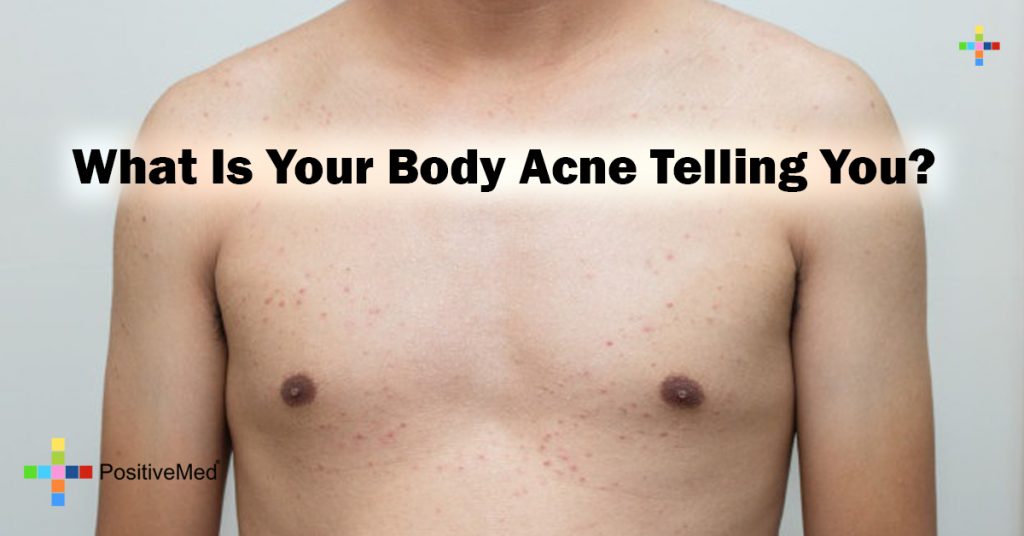
What Is Your Body Acne Telling You?
Pimples are a common issue for many people, but for some, it can be a major problem. Roughly one-quarter of men and half of the women deal with facial acne at some point, but one-third of them will also struggle with acne on their bodies. Although many people may be embarrassed by their body acne, it’s important to realize that it can indicate underlying health issues. Here’s what your body acne might be telling you.

Neck and Shoulders
Having acne in these areas can be caused by excessively tight, unbreathable clothing or friction from purses and backpacks. However, it may also be due to high levels of stress hormones or consuming a diet loaded with refined sugars.
Chest Acne
If you’re able to rule out skin-irritating fabrics like polyester, rayon or nylon, acne on your chest could be caused by allergies or fungal infections. The trouble here is taking place in your digestive system. Too much sugar promotes candida, and food sensitivities may be causing your immune system to rebel.
Arm Acne
Do you notice hard, bumpy, acne-like spots on your upper arms or forearms? This is known as keratosis pilaris, and while it’s not technically acne, it can look just as bad. This can be a sign of nutrient deficiencies caused by malabsorption issues or a low-quality diet.
Belly Acne
It’s rare to develop acne on your belly. If you have it, however, consider wearing looser, less irritating clothes and cutting back on your intake of refined sugars.
Leg Acne
Having acne on your legs, particularly your thighs, can indicate sensitivities or allergies to chemicals in body products, soaps, dyes, perfumes or detergents. Frequent shaving may also be a factor due to ingrown hairs.
Back Acne
The dreaded “bacne” can be caused by many things ranging from too much greasy food to tight, unbreathable clothes. Other potential causes include poor sleep habits, excessive sweating, and skin allergies.
Acne can be a difficult problem to treat, but if you understand what could be causing it, getting rid of it can be much easier. If you have acne in any of these areas, consider the potential culprits and take steps to address them.