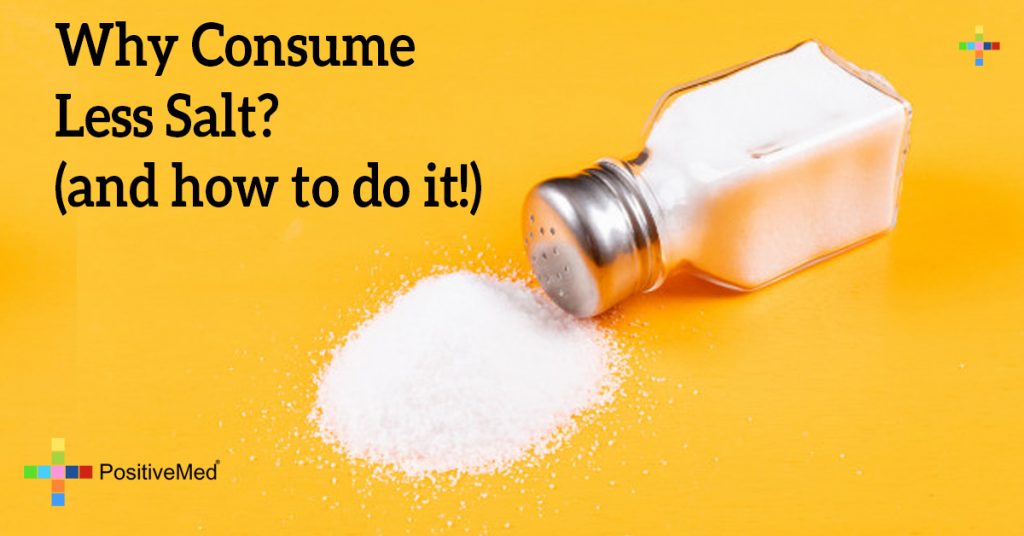
Many of us eat too much salt, this can lead to elevated blood pressure, which puts you at an increased risk of health problems such as heart disease and stroke. Cutting down on salt will keep you healthier and it is not as hard as you might think.
How to cut down?
• Read food labels thoroughly and buy products that contain less salt.
A high salt content is more than 1.5 grams salt per 100 gram (0.6 gram sodium)
A low content is 0.3 gram salt or less per 100 gram (0.1 gram sodium)
• Don’t add salt when you are cooking.
• Put the salt shaker away.
• Use spices that don’t contain sodium, instead use garlic, herbs, and pepper.
• Avoid prepared meals, canned, and dried foods.
Remember that you don’t have to add salt to food to be eating too much, 75% of the salt we eat is already in food when we buy it.

The following foods are almost always high in salt. Avoid or reduce them as much as possible:
• Anchovies
• Bacon
• Cheese
• Gravy mixes
• Ham
• Olives
• Pickles
• Salami
• Salted and dry roasted nuts
• Salt fish
• Shrimp
• Smoked meat and fish
• Soy sauce
• Bouillon cubes
• Yeast extract
Adults should not eat more than 6 grams of salt per day, that’s around one teaspoon. As a rule, aim for foods that have low salt content, leave salty foods for only occasional consumption.